Although I am now old enough to drive myself to the doctor’s office, I have seen the same physician since my sole means of transportation was a shiny pink tricycle. As I stood in Dr. Young’s waiting room just a few weeks ago, something caught my eye. I walked past the roll of smiley face stickers and Scooby-Doo Band-Aids to a framed article I had never noticed before. There, a photograph of Dr. Young squatting on a dusty path broke the expanse of yellow wallpaper. Next to the picture was an article chronicling Dr. Young’s travels to Mexico to administer help to people in need. The nurse beckoned me into the examination area before I completed the article.
After he was certain that my spine was straight and my heart was healthy, Dr. Young asked the question that I had been waiting to hear for twenty minutes: “Anything else I can do for you?” With much anticipation, I asked him about the article in the waiting room.
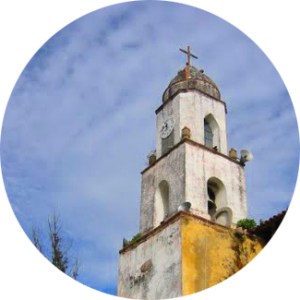
For over thirty minutes, Dr. Young shared larger-than-life stories about his humanitarian expeditions into regions of southern Mexico. He recounted the challenge of smuggling medicine into the country, his run-ins with the “Federales”, and the nights he spent sleeping on the dirt floor of a local church. Yet, his greatest tribulation of all was working with the poorest of the poor, who live in the region.
He told me he typically provides medicine to cleanse the villagers’ systems of parasites, but he also performs minor medical procedures. His efforts make the local people feel better for two or three weeks. Unfortunately, no one else provides medical aid during the fifty other weeks of the year. I gasped at the futility of Dr. Young’s efforts, and the reality of his work dulled my enthusiasm. Then, in a bittersweet way, Dr. Young rekindled my fire as quickly as he had smothered it out.
“Sometimes it just feels like a waste of time—like a drop of water in an ocean. But, what I’ve learned from my experience is that it’s not the medicine that really makes a difference. Dedicating time to those impoverished people is what leaves a real impact. They are much more grateful just to know that someone cares about them than they are to take the medicine that I bring.”
I realized that I too could find a way to combine a professional life (whether it is business, medicine or engineering) with much-needed humanitarianism. At college I anticipate that I will focus my studies on Business, Finance, and International Affairs. With a degree in business but with knowledge of foreign countries and their customs, I will be equipped to create positive change not just in my own backyard, but around the world. I’m excited about my future and look forward to serving others, in the United States and abroad, to the best of my ability.
 A Jacket's Journey