Tomatens Hus

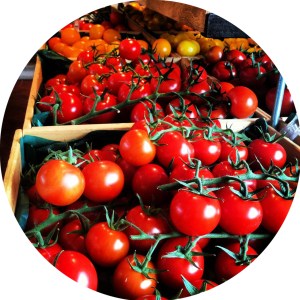
I listened to the gravel crunch beneath the tires, peering out the window to glimpse the rugged red siding of an old building, crawling with vines and surrounded by fields of wildflowers. It was the day of my first JBT finance department luncheon, and we were headed into the Helsingborg countryside, well off the beaten path, to Tomatens Hus. Along with the other fifteen or so department members, I ambled toward the quaint restaurant and was seated alongside my co-workers in a rustic greenhouse that had been refurbished into an outdoor dining room.

Next to me sat the other department newcomer, a June 2013 MS Business Administration graduate of Lund University. I was grateful for his company amongst the stiff, older crowd with whom we had come, and I was quick to ask his name: Yawn, Yom, Yod…. To this day I’m not exactly certain what he replied, but upon seeing my blank stare and raised eyebrow, he quickly added “The worst name for international translation that could ever be given to a child!” We both cracked a smile and in no time, I was able to easily converse with a local Swede for the first time since my arrival in the country.

Along with my new friend and me, Anne-Sofie, Kristofer, and Johann all rested around the whimsical turquoise and white polka dot table, atop which sat woven baskets, spilling with baby pink carnations. Like clockwork, a crisply dressed waitress came to our table and asked in Swedish what I knew to be “What can I get you to drink?” Using my cripplingly limited Swedish vocabulary, I carefully responded, “Vater, tack.” Unlike several of my previous social experiences with my co-workers, the conversation flowed easily and remained, for the most part, in English. When the waitress returned, Johann translated the “Tomato House” menu for me.

After briefly discussing the seasonal items, which included both a tomato mozzarella salad and a pork chop topped with tomato chutney the majority of the table requested a unique dish – tomato pie with fresh greens. It wasn’t long before a plate heaped with fresh salad and steaming tomatoes of all varieties, carefully contained within a flaky, buttery crust sprawled before my eyes. We dug in. Utsökt! Every plate was soon wiped cleaned of the Scandinavian delicacy, which we were disappointed to learn was a Tomatens Hus secret recipe. Despite the fact that we ached from our hearty meal, all agreed that coffee and pastries were in order.  We wanted to savour more delicacies of the farmhouse and we certainly wanted to postpone our return to the office as well.

Soon the scent of traditional rolled Swedish cakes topped with tomato jam and strong Swedish coffee filled the small greenhouse space. A chuckle came from all my lunch-mates as my nose crinkled at the taste of the bitter liquid so soon after the saccharine marzipan cream.

By all accounts, the outing had gone much better than expected – for the first time I was feeling rather comfortable in my home far, far away from home. When the call of unattended stacks of papers and accumulating emails back at the office became so loud we could no longer extend the leisurely afternoon, we all began to stand and walk toward the nearby cottage to settle our bills.

I’m not sure if the cobblestone patio was just too uneven, the air in the greenhouse just too thick, or the tomatoes in my stomach just too heavy… but what came next is what I will likely remember as one of the most disastrous occurrences during my time in Sweden. I briskly stood and, without warning, found myself inexplicably tilting much too far to my right side.

Kristoffer was the only one who intercepted the look of dread in my eyes, and although he thrust his arm in my direction in an unsuccessful attempt to save me, I clattered to the floor taking with me not one, not two, but three chairs.

All sound within the greenhouse ceased as I awkwardly struggled to untangle myself from the puzzle of arms and legs I had created.  Once I had risen, I stifled a cringe brought on by the pain shooting through my neck and wrist and eyed the room of frozen bodies, breathlessly waiting to gauge my reaction.  Not knowing what else to say, I resounded, “WOW! I didn’t realize Swedish coffee was THAT strong!”

To my relief the joke, so painfully terrible that it rivaled the ache in my back, did the trick and the room burst into laughter. Thankfully, as our party continued inside to pay our bills, the incident seemed to pass almost without notice. I purchased two bags of fresh tomatoes, climbed back into the car and let the memory evaporate in a cloud of gravelly dust as we pulled away.

Bangkok, Thailand

The bleary red digits on the taxi’s clock seared their way into my travel-weary eyes. Half past one in the morning. I tried to blink away the unwelcome reminder while padding my temples, which had become beaded with moisture from the water-laden air. As we picked up speed and cleared the top of a bridge, I could see clearly above the cluttered rows of shacks for the first time. The neon lights of the city whipped my stare in all directions and a far eastern rhythm beckoned through the air. My gaze swam through a sea of skyscraper peaks, all flashing red lights and setting the skyline ablaze like a laser show.

Once we hit the main road, I dug my fingers in to the leather door paneling to keep from squealing and to steady myself against the rapid pace we had assumed.  After hearing my shoulder thud against the window on an unexpected turn, the driver grinned into his rearview and told me, in broken English, that between 2 A.M. and 5 A.M. were the only times the roads were free of bumper to bumper traffic. Since the driver was capitalizing on the open road like Will Ferrell in Talladega Nights, it was no time before we reached the heart of the city and to the Swissotel Nai Lert Park.

The car’s door was swept open as if by an unknown force, and multiple small Thai men, all dressed in neutral smocks, knee high white socks and elven shoes with curled toes attended to me as if I were the Queen of Sheba. One held the door as another swiftly grabbed my luggage. Flustered by the sudden wave of attention, I tried to regain my possessions and open the door myself, but as a result of the language barrier, my attempt yielded only ear-to-ear grins, shallow bows, and nodding heads. After setting foot inside the lobby and marveling at the fantastic array of exotic plants and décor, a wave of exhaustion finally hit. Bedraggled, I slunk over to the check in counter and just as I reached for my passport… “You must be SAVANNAH!”

Disturbed that someone had so cheerily exclaimed my name practically 10,000 miles away from my home, I quickly flipped around. Despite the relaxed tones and untucked shirts, there sat what I knew to be a group of seven Deloitte consulting professionals – the sole impetus for my trip to Bangkok, Thailand. They had so considerately waited up for my delayed arrival, brought on by an unexpected 24-hour layover in Japan.  Unphased that the clock hand was now creeping toward three in the morning, the merry band waved me over, kindly introducing themselves. I politely thanked them for waiting up for me and after aquatinting myself with each of the representatives, one from South Africa, a few from America, another from Germany, and two from Scandinavia, they sent me off to catch a little shut eye so I could be at my best for the big event: the Deloitte International Student Business Forum, 2013.

I snuck into my room as quietly as possible, trying not to wake the mess of flowing blonde hair spilling across the pillow in the first bed. My luggage was neatly placed next to my own welcoming resting place, I clicked on the lamp and started to rummage through articles of clothing, searching for my boxer shorts and oversized t-shirt. Tippy-toeing toward the bathroom, I gasped aloud when the tangle of white linens shot straight up in bed exclaiming,

“Oh THERE you are! I’m so glad you’ve made it safely, Savannah! It is Savannah, isn’t it? Oh this is just wonderful. How was your travel? I’m so sorry you were delayed! They’ve left you a little piece of chocolate on your pillow by the way – mine was quite good. Oh but you must be EXHAUSTED! Breakfast is at eight but it’s optional if you’d rather get a little more shuteye. Everything is in that folder of papers right there that they’ve left on your bed. There’s quite a nice little gift bag too….”

“I’m sorry, I’m not sure I caught your name,” I cut in, unsure when the fountain of information would cease. Eline was from Norway. At 24, every inch of her exuded the image of a strong, Scandinavian ice queen: beautiful, yet rugged from a life in a country with one of the harshest inhabited environments in the world. Her burst of excited energy was short-lived, and before I could pump her for more information, her eyelids fluttered closed once again.

In the morning, I descending the hotel’s grand staircase into the hustle and bustle of seventy other bright eyed, eager students from all around the globe. Sitting amongst them at breakfast, I felt right at home. To my right Buse from France munched her croissant, to my left Natalia from Poland forked into her sausage, and Nicolas from Belgium downed his third cup of coffee in one sitting just across the table. I looked down at my peanut butter and jelly toast and marveled at how despite our distinct differences, we were somehow all the same.

Capturing the excitement, education, and exertion that ensued in the following three days is beyond the grasp of my literary ability. The Holy Grail of all things “Undergrad Deloitte” to any one who courts the top-ranked business consulting company, the Deloitte International Student Business Forum (ISBF) is a four day program, held once each year at a select destination, focused on attracting the interest of upcoming top talent, promoting international collaboration, and providing a once-in-a-lifetime experiential opportunity to students who hope to learn about consulting and potentially enter the field.

Clad in our Deloitte paraphernalia we had been instructed to don, our entire ISBF party snaked down a long corridor and into a room, empty apart from a wooden floor, several white rectangular cloths, and multiple sets of markers. As the activity was quickly explained and undertaken, I was hastily introduced to my teammates and coaches to whom I had been assigned for the weekend. I struggled to gauge our group’s dynamic during our first task since I had missed the previous night’s reception and icebreaker activates due to my late arrival. But, in no time, we had constructed a billowing flag representative not only of the event and our group’s members, but also of the “hometown” we had been assigned. Los Angeles!

Interestingly enough, both Bangkok and Los Angeles result in the same English translation: “city of angels.” As the only native English speaker, I was promoted to be the unofficial voice of the group. After presenting our flag and creating a video inspiring teamwork, the entire ISBF clan was ushered off for a traditional waterside lunch and a grand tour of the city. By bus, by boat and by foot we went, romping through the dusty, sunbaked streets.  We wove through local markets, shunning the skewers of fried rodents and the curious looks of the natives, peddling their peculiar wares. After hours of inspecting gilded palaces, glass mosaics, grimy canals, and congested shops, we wearily returned to the Swissotel.

Now that we had experienced our fill of urban Bangkok, every ISBF student was itching for the case material. But, through Deloitte’s generous hospitality, we had a little more relaxing to do in the Thai paradise first. That evening, the seventy odd students attending the forum skipped downstairs and to the poolside for a regal buffet. The sky was dark blue and speckled with glowing stars as I pushed my way through the sumptuous greenery alongside the winding path. As I shifted a large tuft of elephant grass from my view, I gasped at the beauty of the dinner arrangements. Candlelight flickered from ever goblet, every ripple in the water, and every silver teaspoon.  Two rows of tables heaped with traditional Thai delicacies awaited the guests, creating a runway toward white linens that rested cleanly across the bamboo tables and chairs. We all talked eagerly with the interesting, diverse students and professionals we had the opportunity to meet and we all indulged in our final meal before the real “games began.”

After a few more educational delays the next morning, in which we learned strategies for working across cultures and the essentials of good project management, the case material was finally revealed. Each team would have exactly twenty-four hours to answer one question: Why host the 2020 Olympic games in Johannesburg, South Africa? It might sound simple, but simple it was not. Not when we had been given more than 5 pounds of hard copy supporting documentation and an additional flash drive with more of the same. Through the first working session we plowed through our plans to achieve the highest marks on the scoring rubric. After a quick break for coffee, my teammate Wynne and I headed downstairs to conduct a stakeholder interview.

Running back upstairs with the needs of our constituents fresh in our minds, Wynne and I relayed the information to the rest of our team before heading to a debriefing regarding our morning sessions.  In great contrast to the night prior, we swallowed our dinner whole and ran, coffee in hand, back to our conference room where we had plastered the walls and tables with pictures, diagrams, flipcharts and sticky notes. It wasn’t always smooth sailing as we continued along the stormy sea to a masterful presentation, but our team grew together, and by the time midnight hit, we had drawn the sails and battened down the hatches – our ship was in it to win it. Natalia exclaimed how she had so many good ideas that she wanted to share, but she found she could only express a little over half of her ideas when using her non-native language, so we took the time to really explore her thoughts. Hock, who had revealed in our working across cultures session that his biggest weakness was public speaking, had accepted our encouragement and started rehearsing a couple of the key points in our presentation to expound upon for the judges. At every stumbling block we learned and we overcame. At two in the morning, the six of us exchanged accomplished hugs and headed off to our separate rooms for a few hours of rest before the competition continued early the next morning.

Just hours later, our team was assembled again, drinking in the pungent aroma of Thai coffee. We were corralled to the ballroom just after breakfast where Deloitte had prepared yet another incredible session for all the ISBF students. All the way from London, Olympic rower Ben Hunt-Davis had come to share his experiences and wisdom regarding how to “think like an athlete.” He described how after several years of methodical training that did not yield desired results, Great Britain’s men’s rowing team made a pact. Every single action that they took, they would ask one question: Will it make the boat go faster?

Ben described the team’s journey and how difficult making the right choices as a result of this question sometimes became. Ben then flashed a picture up on the screen. There, five or six long-legged, broad shouldered men spilled over couches and chairs, all huddled around a brightly lit television screen. Through a window in the background, it was just possible to make out the shape of a large arena above which fireworks were throwing flaming colors into the black night sky. It was the night of the Sydney Olympic Opening Ceremonies, and the entire British rowing team had decided to forgo the exciting festivities after considering the pivotal question that had dictated their every move for the past four years of training – Will attending the Opening Ceremonies make the boat go faster?

The morning after the ceremony, the team woke early and prepared for the biggest day of their racing career. As they prepared to launch the boat, the team huddled together once more to discuss the racing strategy. Despite the dissent of many coaches and supporters, the crew agreed that traditional racing strategies would not suit their needs. The team planned to row as hard as possible from the first second of the race until they had crossed the finish line… They were determined that would make the boat go fastest.

And it did! After winning by more than half a boat length, Ben Hunt-Davis and the rest of the crew proudly stood atop the podium and received their gold medals. Ben’s message rang true not just to aspiring Olympic gold medalists, but also to every student, businessperson, aspiring consultant and goal-seeking individual in that room. It is a universal truth that to ensure victory, absolute dedication and incredible effort must be devoted to a cause.

With that inspiration, our own case-study crew continued along the course for which we had set sail with robust new energy. Working hard every minute until the 1:15 deadline, we handed in our deliverables and began to rehearse for our rapidly approaching presentation to the stakeholders and judges.

We walked into the room, confident and united. I engaged the panel, describing our plan for an Olympic games in which we would uplift the city, the nation, the continent, and also our entire world. Jenny whizzed through her cleverly planned logistics like a well-oiled machine and Nicolas fielded the stakeholders’ questions as if he had been planning for the Johannesburg Olympics his entire life. Pumped with adrenaline, satisfaction and nerves, we burst into the hallway, bellowing our signature “LOS ANGELES!” cheer together. We were proud of ourselves, regardless of the outcome. But, we still waited in anticipation as the judges conferred and four teams were selected to move on to the finalist presentations in front of the entire ISBF conference.

Less than thirty minutes later, we learned that our crew’s ship was still in the race! Team Los Angeles had made it to the final round of the Deloitte case competition. Our presentation was scheduled first, and the three other teams that remained were asked to leave the ballroom. Onita Lazaro, the hospitable and gracious coordinator for the entire conference, flashed me a smile as my high heels clicked towards the stairs beside the stage. I let the atmosphere flood my senses. Silence. Bright, yellow-tinted lights. Every pair of eyes focused right on me. My shaking hands grasped the microphone tightly. I was happy to have something to hold on to. Then I realized that I had much more than a microphone to count on for support. There was the rest of my team, standing ready for the final leg of the race.

Despite the extended presentation period in which we were asked to field more difficult questions, we again left the stage proud of our performance. The wooden doors muted the thundering applause as we left the ballroom for the next team’s presentation. We had given it our all, and all there was to do now was wait.

Divyesh Jevtani and Mike Weinstein, the talented Deloitte Multimedia Managers, pulled me into a side room and interviewed me about my ISBF experience. With the competitive events completed, the interview was my first opportunity to reflect on the enjoyment and immense personal growth I had experienced in just three days. The more I thought about their questions, the more I realized that the Deloitte International Student Business Forum had been the experience of a lifetime.

Feeling more thankful than ever, I skipped upstairs, dawned my cocktail dress, and quickly returned to the festival level for one final evening with my friends at the gala dinner and awards presentation. Once we had all snapped photographs, exchanged phone numbers and shared a few laughs, all the ISBF students were once more shepherded in to the ballroom.

In the hours we had been away the space had been extravagantly decorated. The stage had been replaced and colored spotlights now spun vivid colors across the dance floor and walls. Massive chandeliers glimmered from the lofted ceiling above delicate porcelain china and exotic floral centerpieces. We trouped in, each team seeking their designated table. Ben Hunt-Davis concluded the programming with one final speech in which he shocked the entire assembly by pulling his Olympic gold medal from his pocket and allowing it to be passed around the entire room.

Soon the sound of forks and knives clinking against plates echoed through the room as everyone relished the delectable meal that was served. Just when I thought the hollow in my stomach would never disappear regardless of how much I ate, David Courell pushed his chair back from the adjacent table and straightened his suit jacket. By the time he reached the front of the ballroom the room was already mute. David knew how to work a crowd. He relayed details of the arduous competition, the strengths and weaknesses of each remaining competitor, and the glory that could be bestowed upon only one team.

The competition was stiff, but in a photo finish, the gold medal went to… TEAM LOS ANGELES! It wasn’t twenty-four karat gold like Ben’s, but I sure felt like it was. The hard work had paid off and I was so proud of our team! Nicolas, Natalia, Wynne, Jennifer and Hock, as well as our coaches Karin Andersoon and Joerg Huelshorst were the best teammates I could have asked for, and I am so lucky I had the opportunity to learn from them and share my ISBF experience with them.

After accepting our medals and congratulating our fierce competitors, we were quick to celebrate our victory by breaking in the dance floor. I’m sure we were a sight to see, Deloitte practitioners and students alike twirling around in a strange mix of Columbian salsa, Indian traditional, Argentine tango, and American west coast swing. Before the night’s end, we all piled into the backs of traditional Thai tuk-tuks and headed downtown to a fifty-fifth story rooftop restaurant for the best view of Bangkok and one final hoorah before our extravagant journey came to a close.

Social Justice and Community Service

I closed the door to my North Avenue apartment quietly behind me and draped my weekend luggage across my body like ornaments on a Christmas tree. With my backpack, my suitcase, my camera bag, and my purse, I clattered toward the elevators as quietly as possible, trying not to wake my weary Georgia Tech hall mates who were surely resting this early on a Saturday morning. As I neared the end of the hallway, I heard someone call my name in a hoarse whisper. Turing around I saw Maria Samuel and Kelsey Roberts waving excitedly and clomping down the hall in a similar fashion.

We are all a part of the Georgia Tech President’s Scholars Program, and our second year class was having a winter retreat to Chattanooga, Tennessee. Opportunities to spend time with my classmates had already become far too few after only a year and a half at Tech, and I was thrilled to catch up with some of my good friends. The retreat would also give our group the opportunity to explore and share ideas about “social justice and community service.” Our brigade expanded as we headed toward the Ford Earth, Science, and Technology building about three quarters of a mile across campus.  When we entered the auditorium for a pre-departure briefing and our first session of the morning, excited chatter filled the air! Lara Tucci, Sid Sinha, Carah Stark, Trey Sides… and countless others were already there exchanging warm hugs and friendly words. Although I had at first been reluctant to forgo a weekend of much-needed repose and fun on one of the many fraternity formals that occupied weekends during this time of year, I was already reaffirmed that I had made the right choice by attending the second year PS retreat.

Our weekend had been entirely student-planned, and I was thankful for the work that David McCandless, Karthik Nathan and Josh Price had dedicated to help us enjoy the experience. They had even managed to secure an early morning presentation from the illustrious Sarah Perkins, Coordinator of the Office of Leadership and Civic Engagement! Sarah is well-known across campus for her positive attitude, caring heart, and dedication to serving others. I am very fortunate to work with her through Georgia Tech’s Alternative Service Breaks program and I can attest first hand to how much she has done for me personally, for our organization, and for the Georgia Tech and the Atlanta community as a whole.

Sarah began by encouraging us to appreciate and learn from the new experiences and personal differences we would encounter throughout the remainder of our weekend. With the game “this or that” Sarah illustrated her point by posing questions like, “vanilla or chocolate?” All of us would then scatter to one side of the room or the other depending on our initial reaction and preference. The questions soon became more serious, progressing to inquiries like “passion or commitment?” and “knowledge or power?” It was shocking to see the differences within our group, however it was enlightening to visualize how people with such diverse views can come together in friendship and cooperation.

Next, we all sat solemnly while Sarah shared with us this excerpt from the book “Walking With the Wind” by John Lewis:

“On this particular afternoon – it was a Saturday, I’m almost certain – fifteen of us children were outside my aunt Seneva’s house, playing in her dirt yard. The sky began clouding over, the wind started picking up, lightning flashed far off in the distance, and suddenly I wasn’t thinking about playing anymore; I was terrified. I had already seen what lightning could do. I’d seen fields catch on fire after a hit to a haystack. I’d watched trees actually explode when a bolt of lightning struck them, the sap inside rising to an instant boil, the trunk swelling until it burst its bark. The sight of those strips of pine bark snaking through the air like ribbons was both fascinating and horrifying.

Lightning terrified me, and so did thunder. My mother used to gather us around her whenever we heard thunder. And she’d tell us to hush, be still now, because God was doing his work. That was what thunder was, my mother said. It was the sound of God doing his work.

But my mother wasn’t with us on this particular afternoon. Aunt Seneva was the only adult around, and as the sky blackened and the wind grew stronger, she herded us all inside.

Her house was not the biggest place around, and it seemed even smaller with so many children squeezed inside. Small and surprisingly quiet. All of the shouting and laughter that had been going on earlier, outside, had stopped. The wind was howling now and the house was starting to shake. We were scared. Even Aunt Seneva was scared.

And then it got worse. Now the house was beginning to sway. The wood plank flooring beneath us began to bend. And then, a corner of the room started lifting up.

I couldn’t believe what I was seeing. None of us could. This storm was actually pulling the house toward the sky. With us inside it.

That was when Aunt Seneva told us to clasp hands. Line up and hold hands, she said, and we did as we were told. Then she had us walk as a group toward the corner of the room that was rising. From the kitchen to the front of the house we walked, the wind screaming outside, sheets of rain beating on the tin roof. Then we walked back in the other direction, as another end of the house began to lift. And so it went. Back and forth, fifteen children walking with the wind, holding that trembling house down with the weight of our small bodies.

More than half a century has passed since that day, and it has struck me more than once over those many years that our society is not unlike the children in that house, rocked again and again by the winds of one storm or another, the walls around us seeming at times as if they might fly apart.

It seemed that way in the 1960s, at the height of the civil rights movement, when America itself felt as if it might burst at the seams – so much tension, so many storms. But the people of conscience never left the house. They never ran away. They stayed, they came together and they did the best they could, clasping hands and moving toward the corner of the house that was the weakest.

And then another corner would lift, and we would go there.

And eventually, inevitably, the storm would settle, and the house would still stand.

But we knew another storm would come, and we would have to do it all over again.

And we did.

And we still do, all of us. You and I.

Children holding hands, walking with the wind. That is America to me – not just the movement for civil rights but the endless struggle to respond with decency, dignity and a sense of brotherhood to all the challenges that face us as a nation, as a whole.”

What Sarah shared was SO powerful. We broke into small groups where we discussed the excerpt in detail, sharing childhood memories that helped us or hindered us, who we admired as “people of conscience,” and the what we saw as the “weakest corners” of society and how we could effectively address those weak spots.

Finally, Sarah concluded by urging us to open our minds so that we could grow in our understanding of the retreat’s themes – social justice and community service.

My brain already felt stretched further than it had been in months – and that’s saying something for a Georgia Tech student! Excited about what we would learn over the next two days, we flung our belongings beneath the bus and hopped aboard for a pleasant journey to Chattanooga!

After dropping our luggage at the hotel, we quickly boarded the bus again for trip to David’s high school where he had prepared an activity for us. As the bus lurched down the steep hill outside our accommodations, the disconcerting screech of metal on asphalt brought our progress to a standstill. The bus was stuck. The back fender had caught against the ground, leaving the back wheels practically suspended and unable to regain traction.

In minutes, Ryan Simpson became a stand in traffic director, Karthik was speaking with a man who had stopped nearby to see if he could assist, David was on the phone with the bus agency, Bradley Smith had headed outside to see if a little elbow grease could dislodge the vehicle, Joe Boltri was consoling the driver, and the remainder of us had begun a lively discussion of comparative religions at the back of the bus. It was our PS class at its finest!

While we waited for assistance, the leaders decided to improvise – we would complete the activity in the hotel parking lot instead of at David’s high school, then we would be able to head straight to downtown Chattanooga for dinner.

The exercise essentially created an environment in which, using different colored poker chips, every individual was randomly assigned a certain “value” in an imaginary society. This point value was not explicitly revealed to any other individual throughout the course of the game. During each timed round individuals were given the opportunity to trade chips in hopes of creating combinations that netted a higher point value.

I soon realized that I had been dealt an unfortunate hand. I was unable to make any favorable trades no matter how hard I tried! I coped with this unlucky circumstance by shutting down completely. I refused to even attempt trading. Others who had received the same point value as me resorted to conning individuals with higher value chips by entering into a trade by offering one color chip, but ultimately handing over another color chip entirely. At the end of each round, we were segregated by point value into “classes.” Each group was then given three tennis balls, each representing a very high point value. These tennis balls, by consensus of the group, could be distributed among the group members in any combination.

In the lowest value group, we continually decided to offer the tennis balls to a single player who had the highest value within our class, hoping that we could collaboratively catapult them to the upper class, and hoping that they would remember how we had helped them once they reached the pinnacle of the imaginary society. Additionally, the upper class was allowed to make a single, unrestricted rule at the end of each round.

Without fail, each round the upper class attempted to make rules that maintained and strengthened their exclusivity. And unfortunately, even when the individuals whom the lower class had pooled their resources to help reach the upper class, the least valued class was never remembered favorably. A middle class also existed. They remained relatively neutral during the entire game and distributed their tennis balls evenly to maintain their population. There was very little movement between classes thought the entire game.

Tension peaked when I, as a member of the lowest class, started a physical movement of our group toward the upper class, who stood on the other side of the parking lot. As we began our “revolution” to take their tennis balls for ourselves, they became outwardly upset and frightened. They began holding out their hands toward us, clinging to their tennis balls as they backed away in a pack, and yelling at us to stay away. The profound effect the game had had on our minds stopped me in my tracks. With that, we ended the game and began our reflection.

Many conclusions can be drawn from this game, and the exercise yielded a powerful discussion of classism, types of government and governmental roles, the value of money, and many other interesting social issues.

Still moved by the power of the activity we had just completed, we headed into downtown Chattanooga. Our discussion of social justice and community service continued over dinner, then David was kind enough to give us a short walking tour of the city. We wandered across starlit bridges, next to imposing historical museums, and through cobblestone streets where climbing ivy clung to brick buildings. Our tour ended in Rembrandt’s Coffee house where we all enjoyed exotic teas and coffees, delicate pastries, and the company of good friends.

The next day, a small group of us visited the Basilica of St. Peter and Paul for Mass before meeting the rest of the group at Lookout Mountain, where we spent some time enjoying the Tennessee wilderness. We talked and laughed as we wandered through the forest paths.  At one point our scholarship director even scaled a huge boulder near the side of the path as we all chanted “Chaffee, Chaffee, Chaffee!” – proud and thankful for the wise, caring mentor with which we have been blessed.

After our woodland exploration, we headed to the McCallie School for a presentation by the Women’s Fund of Greater Chattanooga. Through a difficult but necessary discussion of human sex trafficking, the well-spoken women helped us further explore and reflect on the topics of social justice and community service before we headed home.

We returned to campus late Sunday night, but our retreat was not yet concluded.  We would put into practice what we had learned over the course of the retreat by participating in a community service project on Martin Luther King Jr. Day.

Early Monday morning I stumbled from my bed and toward my car. I drove a few miles up the highway to Howell Mill Road, where I loaded down the back of my car with seventy fresh Chick-fil-A chicken biscuits. My steaming cup of coffee and the aroma of the breakfast roused me as I drove back toward campus to rendezvous with the remaining second years that had been on the retreat. I was ready for MLK Day of Service!

We caravanned to National Divine Church, located in the heart of Atlanta’s “Sweet Auburn District.” The sidewalk in front of the church was dusty and cracked, the wooden boards on the face of the building were weathered and chipped, and weeds and brush had sprouted up all along the base of the foundation. Inside the church, the floorboards were warped and squeaky as we walked up the narrow, steep staircase. Although the church was time-weathered and in need of repair, it was still a beautiful building with glowing stained glass windows and a welcoming atmosphere. Although the church building itself was not large and flashy, the members of the congregation that stood waiting to welcome us were humble, sincere, and proud.

It wasn’t long before our Georgia Tech crew had joined about twenty other volunteers who lived and worked in the area. While everyone happily munched on the biscuits, I sought out our volunteer point of contact – Pastor Bobby L. Graham.

Although I had communicated with “Revered Bobby,” as he preferred to be called, over email, I had yet to meet him in person. After just minutes of exploring the small church, I was certain I had found the right man. He stood in a doorway that led up to the second floor, kindly directing a group of new volunteers who had arrived. “Now y’all just head upstairs and get some breakfast! There’s plenty for everyone, so eat up and we’ll get started soon!”

Revered Bobby then turned to face me for the first time. His brilliant white smile was infectious, as was the enthusiasm and compassion in his tone. I introduced myself and he graciously thanked me again and again. After our brief meeting, he told me that he would meet me in the upper room to open the event soon.

Back upstairs, I noticed that an unintentional divide had formed between the local volunteers and the ones from Georgia Tech. I grabbed my own chicken biscuit and purposefully sat slightly removed from my friends. Soon I began talking to Charles Alford. Just a little older than me, he was originally from Montgomery, Alabama, but had been living in the city for almost three years. Charles is a line-backer on the Clark Atlanta University football team. He was very lively and happy during our discussion, and I was glad to make a new friend.

Reverend Bobby entered the room, thanked all the volunteers, described the projects to which we would be assigned, and echoed Sarah’s messages once again. He too thought it was important for us to serve others and to appreciate diversity, much like Dr. Martin Luther King Jr. himself. The band of volunteers split up across the neighborhood to pick up trash, weed the church’s garden, and craft Valentine’s Day cards for those living in a nearby assisted living facility.

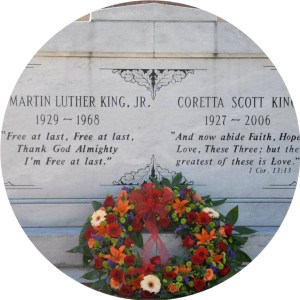
With several other members of my PS class, I scavenged the streets, tossing everything from empty cans to fallen concert flyers into my trash bag. While searching for trash, our group also took a break to see the MLK monument and to tour the house where Dr. King had grown up. The time on site flew by, and it wasn’t long at all before we surveyed our work, reloaded our tools, and headed back to campus.

During the week that followed, I made plans to meet Reverend Bobby on Sunday so that I could give him one of Georgia Tech’s “MLK Day of Service” t-shirts and pick up the remaining supplies that we had left at the church. As usual, I was on a tight schedule. My mom had driven to Atlanta from our home in Cartersville and we planned to have lunch and spend the day together. I hoped I would be able to make the exchange with Reverend Bobby in less than ten minutes so that we could be on our way, but my mom accompanied me into National Divine just in case the transaction did not progress so quickly.

As we peeked into the front door of the church soulful gospel music met my ears. An eager usher swooped my mother and me toward the pews before we had a chance to protest. I glanced at my mom, trying to convey that I was sorry to keep her waiting, but she gave me an accommodating and patient smile. Moved by the heartfelt music and the insistence of the usher, we had a seat toward the middle of the room. No more than twenty people sat in the small church, and it was a treat to hear Reverend Bobby preach to us on such a personal level. Every word he shared was fraught with passion and with meaning! When Revered Bobby saw me amongst the congregation, he also shared the story of how my PS class had come to volunteer at National Divine for MLK Day. I could tell how much our small contribution meant to Reverend Bobby and the rest of the appreciative community members in the church.

During the service, I spotted Charles whom I had met during the MLK Day of Service. As the congregation sent up one final “Amen!” I made my way to the front of the room to greet him and Revered Bobby. After introducing my mom to Charles, Revered Bobby swept the two of us over to two women standing nearby – his mother and his sister.

His mother was dressed from head to toe in an elegant purple dress and his sister shared the same glowing smile as Revered Bobby. Again and again they each looked into my eyes and thanked me for my service to their church and community. Then, with Mrs. Graham’s hands covering mine, the importance of the service I had performed at the beginning of the week became much more clear than it had been while I was clearing trash from the surrounding streets.

On the previous Monday, picking up litter in the historic neighborhood had seemed relatively insignificant; while combing the streets I had watched people throw down more cigarettes and gum wrappers just ten feet away from where I was cleaning. I didn’t exactly leave the project with a sense of accomplishment, and although I was glad that I had volunteered my time, the service I performed seemed somewhat trivial. It was not until I stood inside National Divine Church nearly a week later that I realized picking up trash was not the true value of the service I had performed.

The importance of MLK Day of Service was that our PS class took the time to show compassion to others and to another community outside of Georgia Tech. Mrs. Graham revealed for the first time how much the residents of the area felt cared about and loved because of the small tasks we had performed. Picking up trash was a small gesture, but it was an outward manifestation of a much grander gesture: understanding and valuing all people and all communities.

Our service mattered not because the streets were a little bit cleaner, but because we dedicated our limited time in order to make it clear how much the residents of the district mattered to our PS class and our Georgia Tech community. Reverend Bobby exemplifies this sentiment every day.  Just a block away from National Divine Church stands the famous, prosperous, and prestigious Ebenezer Baptist Church, where Martin Luther King himself used to preach and attend services. Although I’m sure a man as talented and heartfelt as Revered Bobby could easily pastor Ebenezer’s congregation, he chooses to shepherd his flock at National Divine. Every day Revered Bobby teaches a lesson in servant leadership; he acts not for himself and for his own glory, but for the good of others. He is proud of his church and community, and he gives his life in service to their people. As a result, he is loved and revered by all those who know him.

As the saying goes, sometimes great or impactful things come in small packages. In some cases, picking up trash on Auburn Avenue or compassionately leading the spiritual lives of those within National Divine can have a greater impact than if our PS class had raised money to publicly erect a new Martin Luther King commemorative monument or if Revered Bobby began pastoring at Ebenezer Baptist Church.

The support and gratitude I was shown by the Graham family was encouraging, and that support did not end when I left National Divine Church. Reverend Bobby occasionally sends me an encouraging text message or prayer, and he always invites me to join him for another Sunday service – two things that mean a great deal to me. He has become my advocate, my friend, and one of my role models.

It is sad to think of what we miss when we are preoccupied within our own small worlds. I felt that even as a single student at Georgia Tech I was helping the greater Atlanta community positively change and progress. Sarah’s original message and the message of the retreat had come full circle. Active community service and striving for social justice impact our lives and the lives of others. Community service and seeking social justice are valuable in helping us understand our differences as well. By serving others we create a unity of humility, kindness, and love that knows no barriers or bounds.
Moguls

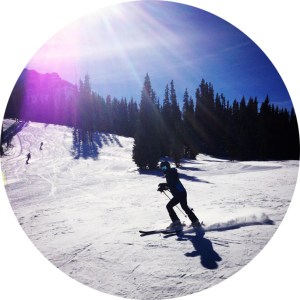
Even since a young age, my family has been fortunate enough to head west each winter for a Christmastime ski trip. Jake and I had been skiing since we could walk, but this was only our fourth year on snowboards. We were enjoying Aspen, Colorado for the first time, and as much as I hated to admit it, Jake was putting me to shame. Although we had progressed similarly during the first two years on boards, his expertise had recently soared off the charts while mine had continued on only a steady, laborious climb. For the majority of this trip, I had watched him from far behind, or from a snowy heap on the ground as he glided effortlessly down the mountainous terrain.

Being the patient, loving brother that he is, he continued to encourage me. On the third day of the trip, Jake convinced me to take the afternoon to ride with him down some of the most intimidating slopes in the park. Wanting to spend time with him, and to learn, I consented and prepared my courage for a true test.

As children, whenever we had been presented with challenging, mogul-studded trails, my dad would always chuckle and say, “Man guys, those look like Volkswagens!” Then he would give us a hearty shove in the right direction.

So, there we sat, at the top of Wildcat, staring at what appeared to be full-blown tractor-trailer sized mounds of snow. I was frozen with fear and tried to persuade my brother to take an alternate route down. Jake rested quietly for a moment, examining the foreboding terrain ahead. Then, with wisdom beyond his eighteen years, he looked me in the eye and calmly declared, “You know what, Savannah? Sometimes life gives you moguls and when it does, you know what you gotta do? Just get through ‘em.” And with that, he pushed himself off the ground, dusted the snow from his pants, and carved up that black diamond like a chef would a Thanksgiving turkey.

Krav Maga

Kravmaga

Check out this video of Georgia Tech Alpha Chi Omega’s Epsilon Phi chapter doing some Krav Maga during our self-defense sisterhood retreat! Real. Strong. Women.

Krav Maga, meaning “contact combat,” is a non-competitive tactical martial arts system developed by the Israeli military. It is intended to be used by people of all different strengths, body styles, and skill levels since the country requires mandatory military enlistment from all citizens.

Krav Maga encourages students to avoid confrontation. If this is impossible or unsafe, it promotes finishing a fight as quickly as possible.Students learn to defend against all variety of attacks and are taught to counter in the quickest and most efficient way.

It’s About the Journey

6200 Miles

75 Days

16 Cities:

Budapest, Hungary
Prague, Czech Republic
Vienna, Austria
Rome, Italy
Venice, Italy
Lucerne, Switzerland
Brussels, Belgium
Ghent, Belgium
Brugge, Belgium
Florence, Italy
Paris, France
Oxford, England
London, England
Cinque Terre, Italy
Barcelona, Spain
Dublin, Ireland
 
150 Students
 
1 Unforgettable Experience

Upside Down

Bungee

Check out this video from my bungee jump!

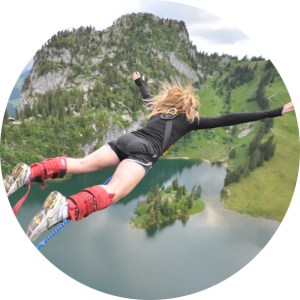
Eight seconds. That’s all it took to turn my world upside down – literally.

I watched my veins throb just beneath the ice-cold skin on my arms and felt my teeth clip together as my they chattered – whether from the cold or from my mounting nerves I could not be sure. Reluctantly, I had stashed my jacket back at the rendezvous hut after our guides mandated that under no circumstances should wear loose fitting clothing be worn.  Now, as the sun began to sink behind the peaks of the Alps, sending flares of red and orange into the sky, my fingers numbed and the effects of the Swiss weather took their toll.

While fiddling with my harness, I analyzed the faces in the crowded cable car. Shai Messingher, a good friend of mine from Georgia Tech, sent me the brilliant, reassuring smile that he was famous for and I briefly swallowed my anxiety to shoot him one in return. Bouncing on the balls of his feet, Braydon Dunn, another friend from Canada I had just made on the van ride through the mountains, glanced tensely at me from the corner of his eye.

Despite the techo music shaking my fragile eardrums, I could still hear the blood pulsing through my temples. In the singular most courageous act of my life I made eye contact with our guides and slipped my shoulders under the rope toward the middle of the cable car, separating myself from the group. My breath rattled in my hollow chest as I let them do their work: clipping, sliding, tugging, pulling. They screamed into my ear over the music that I was ready. It was time.

I opened my eyes to see the red, iron- framed threshold three feet before me.  A genuine smile spread infectiously across my face as I realized the hardest part was over and I came to peace with what I was about to do.

“FIVE, FOUR, THREE, TWO, ONE – BUNGEE!” I cackled insanely as my feet left the platform and I was thrust into free fall. I was flying – and it exceeded every one of my childhood dreams.

After several forceful bounces I descended toward the crystal clear glacier fed lake below. Hanging upside down I felt like I was walking on the blazing clouds and I welcomed the peaceful tingling of cowbells that peppered the landscape, reassuring me that my feet would soon return safely to the earth.

Window to the Soul

As a culminating project for our art history class we were asked to analyze the imaginary personal art collection that we have been building during our time travelling.

 Personal Collection: Window to the Soul

  • Giulio Romano, Diana and the Dead Orion, Renaissance, Italy, circa 1500
  • Anthony van Dyck, Nicholas Lanier, Renaissance, England, 1632
  • Tintoretto, The Temptation of Adam and Eve, High Renaissance, Italy, 1552
  • Bernini, Aeneus, Anchises, and Ascanius, Baroque, Italy, 1618
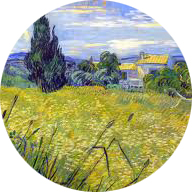
  • Vincent van Gogh, Green Corn, Post-Impressionist/Modern, France, 1889
  • Philippe von Bree, Workshop of Women Artists, Romantic, Belgium, 1831
  • Joseph Rebell, Sea Storm on the Arch of Miseno Miliscola with a view to Nisida, Romantic, Austria, 1819
  • Orazio Riminaldi, Love Triumphant, Renaissance, Italy, 1624
  • Conaletto, View of the Ducal Palace in Venice, Renaissance, Italy, before 1755

On the banks of Lake Lanier rests a large cedar and stone cabin partially concealed by yellow-leaved maple trees and mounds of golden chrysanthemums. Just outside the house a neat carpet of emerald green grass reaches towards the rugged Georgia forest stretching for acres in each direction. The crunch of feet against the pebble driveway, the tranquil chirping of birds, and friendly conversation is all that can be heard in the crisp morning air. I look over my shoulder at the small cluster of eight visitors as I clasp the door handle, pushing the oversized door inward to reveal my open living room decorated with cushy brown leather sofas, hardwood floors, and a intricately woven Turkish tapestry. In this quiet, plainly decorated room of my house I have placed the works of my personal art collection, Window to the Soul.

To me, the most important quality of a work of art is its ability to be interpreted differently by many individuals. I am fascinated by how one person may strongly react to a piece of art that millions of others allow only a cursory glance. I chose each piece of artwork in my collection as a physical representation of a personal life event. Each memory holds substantial meaning and evokes poignant, emotional recollections. I feel that my personal collection should initially be presented from my perspective – through MY eyes. The goal of my collection however, is not only to give others insight into my life and my past, but to also stimulate their thoughts and emotions about the pieces in the collection.

The pieces in my gallery are placed around the outskirts of the spacious square room from left to right chronologically according to the memories they represent. No structured tours are given, although questions are always welcome. Instead I have written a short narrative that is engraved on copper plaques next to each of the nine works describing a story from my life.

First, visitors will observe Giulio Romano’s Diana and the Dead Orion, which depicts Orion hopelessly slipping away from the sorrowful Diana into a sky of darkness and wispy clouds. Every time I see this work it reminds me of the death of my Grandpa Leroy who passed away when I was only two and a half years old.  I wish I could climb back into my Grandpa’s broad lap and munch on the Tootsie Rolls he would secretly slip to me, but I know that my sparse memories of him are all that remain.

As viewers continue around the gallery, they will see paintings that represent events that occurred later in my life. A portrait of my great grandfather that was discovered in the Kunsthistorisch by my Aunt Amber hangs upon my wall, summoning memorable evenings at her house during my youth. Her creativity and love of writing have influenced me more than I ever thought possible. Following that, The Temptation of Adam and Eve captures an uncomfortable memory from my middle school days when my peers insisted I join with them to exile another girl from our friend group.  The importance and strength of family in my life floods from Bernini’s sturdy marble statue of Aeneus, and I recall events depicting how my role within the family has changed greatly over the last few years. Further down the wall a story recounts the serenity of my trip to Glacier National Park at the beginning of high school and similar tranquility that Monet’s painting evokes.

Philippe von Bree’s Workshop of Women Artists portrays a pale, delicate woman clad in sheer organza pants and exotic gold arm bands. Atop her head rests an entire bear skin and over her left shoulder she softly rests a massive wooden club. This paradoxical juxtaposition of a powerful, yet delicate female reminds me of my mother. I feel like she must have struggled for the past eighteen years with raising my brother and me in an effective, structured manner while still preserving her soft and loving demeanor.

Rebell’s work of a storm battered sailor who cannot see the salvation that lies ahead of him represents my strengthened faith in God and how although I was wary to trust in him when choosing a college, he later showed me his way was the right way, and provided ten-fold what I had hoped for. A contemplative Cupid in Riminaldi’s, Love Triumphant ushers in the nostalgia of a wonderful relationship battered by the war of distance. Lastly, I chose the view of the Venetian Ducal to remind me of the Oxford Program trip. I want to forever preserve the memories, education, and friends I have gained here.

Everyone has their own experiences… these are just a few of mine. By sharing in the experience of art we can exhibit individuality and humanity’s common nature simultaneously. The beauty of this gallery cannot be found in the gilt Corinthian columns or porphyry mosaic floors of an elaborate museum. Instead, the beauty of this gallery is literally in the eye of the beholder; it is in the way each person reacts to a work as a result of their personal experiences. The eyes are said to be the window to the soul, so by learning to see art from another’s eyes, we can come to see the uniqueness and beauty in every soul.

Cinque Terre, Italy

In my mind I had just darted through platform nine and three-quarters, secured my owl in his cage and boarded the Hogwarts Express.  It was my first time riding a train, and as we pulled away from the station, the initial screech of metal on metal brought me back to reality. I was not headed to a magical land of wizards and castles, but I was on the way to a different kind of paradise with four of my wonderful girl friends.

Through small towns and countryside we travelled in search of scenic views, fresh air, and the peaceful chirping of birds that could only be found far away from the honking mopeds and brash street vendors of Florence. A few hours and one quick train change later we entered a tunnel so dim that I could hardly make out the crumbling bricks flitting by just inches from the Plexiglas window. Just as I glanced away from the uninteresting view to form disembarkation plans with the other girls, they released a unified “Oooooh!”at something behind my back. Wheeling around, I at first saw the same expanse of darkness, but then a snapshot of a colorful little community nestled into a jagged cliff imposed upon a brilliant blue sky broke through an archway in the tunnel.

The Cinque Terre is a rugged portion of coast on the Italian Riviera composed of five villages: Monterosso al Mare, Vernazza, Corniglia, Manarola, and Riomaggiore. All of the surrounding, terraced hills that overlook the sea belong to Cinque Terre National Park, where there has been a significant effort to combat torrential rains and associated mudslides in recent years. A series of paths, trains and boats connect the villages, and cars cannot reach them from the outside. This quiet coastal utopia was the perfect location to relax on our day off from classes.

After arriving, at Corniglia, the central of the five townships, we began our exploration. Unlike the other cities of the Cinque Terre, Corniglia is not directly adjacent to the sea. Instead, it is on the top of a rocky outcrop about one hundred meters high, surrounded on three sides by vineyards and terraces and enclosed on the fourth side by a steep and rocky descent to the sea. To reach Corniglia, it is necessary to climb the Lardarina, a long brick flight of steps composed of thirty-three flights with three hundred and eighty-two steps. Our party was famished from the journey, so we immediately sought the chief form Italian sustenance -pizza! Undeterred by the looming staircase we trekked upward, arriving at the top in just a matter of minutes. We snapped a few photographs in front of the breathtaking view as the cool sea breeze cooled our exerted bodies, then continued to a nearby pizzeria.

Under a red and white striped awning surrounded by mounds of petunias, violets, and honeysuckles we marveled at the view; Homes with laundry precariously flapping from windows clung to the steep outcrop of rocks only meters to our right.  After savoring our classic Italian dishes, we made a move back down the mountain with the intent of hiking to the next city south, Manarola, only to find a sign at the bottom of the Lardarina informing us that the normal hiking passage was closed. We again boarded a train, somewhat glad that we would be able to enjoy a day sans five plus miles of walking.

Just before the train doors were sealed, the relaxed state I had been lulled into was obliterated. “Thief, thief! Give me my wallet back you dirty thief!” a plump man with a heavy British accent began to scream not even an arm’s length from my face. Petrified and confused, I stood stone cold as I witnessed my first public theft since beginning my time abroad. After a stern shove from the Britt, the short, tanned man to my right bolted down the length of the car, and a brown leather billfold plopped directly onto my foot. Now acutely aware of my surroundings and the situation, I simply stepped away, not wanting to implicate myself in the disaster. For the remainder of the voyage our formerly subdued clique became an uncontrollably chatty gaggle of girls as we replayed the exciting event again and again.

Once the train halted in Manarola, we ventured away from the train station and into a nearby piazza, where we encountered a similar group of American girls from none other than the University of Georgia – small world! After a quick meeting with our fellow Georgians we headed down a flight of stairs and around a corner toward the unmistakable taste of salty air. To our delight, a smooth ramp provided safe passage over the treacherous black rocks and straight to the Ligurian Sea.

Just as we were shimmying of our shorts to test the waters in our bathing suits, Meghan Green proposed to the group “Wow guys, that man sure looks a lot like Dr. Ulrich,” gesturing in the direction of the high overlook from which we had just come. Laughing we all agreed that the tourist strangely resembled our music teacher with his classic denim on denim apparel and black sling over bag hanging in front of his stomach. Upon further inspection, we noted that the man to the right of “Dr. Ulrich” was practically identical to Dr. Cheijka, our art teacher and that two other figures resembling our two group leaders had approached from behind to observe the view.

“Dr. U, Dr. U, Dr. U!” All five of us began to squeal at the top of our lungs. Dr. Ulrich has a hearing aid in each ear and is still very hard of hearing even when they are functioning at full capacity. For an embarrassing thirty seconds our screams were not substantial enough to snag his attention, though they were loud enough to catch the glaze of all the quiet-seeking sunbathers scattered about the rocky crag. Just as we were about to throw in the towel, we received a goofy, reassuring smile and a friendly wave from our friends atop the rocks. After exchanging distant hellos, we continued with our swimming preparations.  I curled my toes up against the crisp water lapping against my calves as I struggled not to slip down the algae covered ramp. We spent about half an hour enjoying the cool ocean water and contrasting summer heat before unwillingly retreating up the hill toward our final Cinque Terre city of the day, Riomaggiore.

The path to Riomaggiore is known as “Via dell’Amore” or “The Lover’s Walk.” People from across the globe come to this serene trail overlooking the Ligurian to forever engrave sentiments of their love in stone. Some lovers also choose to “lock in their love” by securing combination locks onto the various banisters that protect walkers from the steep drop-off. With a group of five girls, this stretch of our journey was certainly the most romantic and emotional. After studying the sweet records that would forever stand the test of time, and after leaving a few notes of our own, we departed the tranquil Cinque Terre coast and returned to the train bound for Florence, fulfilled with a day well spent.