Murano, Italy

I anxiously tapped my credit card against the dull, plastic countertop as the ancient printer sputtered out the receipt for our tickets. The water taxis leave every thirty minutes from Ferrovia, the central station in Venice, and we HAD to catch the battered vessel that was currently bumping up against the dock a couple hundred meters away. I squiggled some semblance of an “S” and an “A” on the curled slip of paper and all but threw the five other tickets to my travelling companions. “Run for it!!!” I yelled; Unfortunately, “running” is hardly ever possible on the tourist crowded Venetian drag. Shouldering through the walls of backpacks and sneakers, I saw Andrew Edge and Allison Smedberg bobbing in and out of sight ahead of me. Skidding on the marble pathway, slick with fresh rain, I allowed myself a quick glance over my shoulder to check the rest of the gang’s progress before bolting around the corner toward the boat. With one last shaky step, I was securely aboard the boat. As I pivoted, I watched our last passenger climb across the ominous crack that had begun forming between the floating ferry and the island. Erupting in laughter and relief, we collapsed onto a cluster of seats near the bow of the boat.

Rain thudded against the Plexiglas plates as we plowed through the rough canal waters toward the nearby island of Murano.  At first, Murano prospered as a fishing port, a salt production site and a central trade location, but soon the island’s commercial importance declined. Years later, all the glassmakers in Venice were forced to move to Murano because the inhabitants of the mainly wooden-framed city feared the outbreak of factory fires. Eventually exporting began and the island became famous, initially for glass beads and mirrors. Aventurine glass was invented on the island, and for some time Murano was the main producer of glass in Europe.

After about thirty minutes we trudged from beneath the boat’s shelter and onto the soaked, creaking wooden platform.  Just as we crowded around a map to orient ourselves a local advised in broken English and with heavy use of hand gestures, “Glass blowing… THAT way. Closes, four o’clock.” Glancing down to my wrist I watched the longer finger creep past the nine. Time for another mad dash.

We fast-walked to the best of our ability, knowing that one false move in our ill-functioning attire could leave us on the ground or worse yet… in the water that lapped along the sidewalk only three feet to our left. Just when we thought we would never find the factory amongst the winding routes that are so commonplace throughout Europe, we traversed a bridge and zoomed under an arch straight into a yellow sign reading “Pauly & C. – Compagnia Venezia Murano.” Founded in 1866, this is the oldest glass factory that is still in operation today. We then saw a younger man ushering us his way and into a plain, brick building. Though somewhat skeptical, we didn’t want to miss our only opportunity to see the glassblowers in action, so we reluctantly followed.

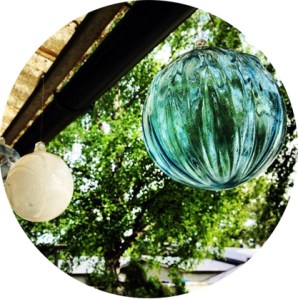
We turned left into a room with just a few other camera-laden tourist types and were directed to stand on a tiered platform a safe distance away from the glowing furnace, whose heat was being carried all the way across the room. The younger man began to narrate as a careful yet certain “Master Glass Blower” began to showcase his trade. Even though my polyester rain jacket was slowly turning me into a Hot Pocket, I was entranced as the trained artisan easily rolled a rod around in his hand that seemed magically attached to a magma like substance on one end. He spun, worked and blew into the metal rod until the shape of a sphere, and then a vase began to take shape from the glowing fireball.

Once the masterpiece was complete, it was set on a table to cool for several minutes while the young man continued to explain to us the mixture of silicate sand that is used to form the glass and the insanely high temperatures (upwards of two thousand degrees Fahrenheit) that the glass remains even after cooling for several minutes. While we all puzzled over these radical facts, the man reached into a bucket and splashed a handful of water onto the vase. Just as quickly as it had been forged, the piece of artwork shattered into hundreds of shards on the concrete floor.

I was taken aback by the impermanence of the clear urn and how quickly its beautiful existence had been terminated. I couldn’t help but think what a shame it is that all good things seem to come to an end all too quickly. Already I have travelled to Budapest, Prague, Vienna, and Venice…. only four more cities remain. I have loved every moment of my time on the Oxford Study Abroad Program! Travelling across Europe, meeting new friends, seeing new sights like the island of Murano, and learning so much each and every day has been a true blessing. I am determined to make the most of each day and each experience that still lies ahead of me!
Theresienstadt, Czech Republic

I bade farewell to the gray, water-laden sky as I ducked into the catacomb like corridor. It seemed like at any moment the Heavens might burst forth with tears… and so might I.  Deeper into the darkening, bone-chilling cavern I ventured.

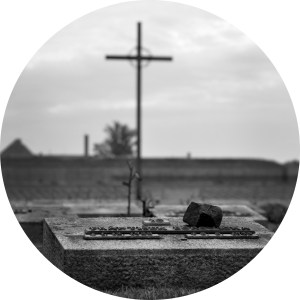
Terezín, or Theresienstadt in German, is a former military fortress in the southern part of the Czech Republic  that was erected in the late 18th century by the Habsburg Monarchy. When it was determined that the fortress was not strategically located for battle, the complex developed into a sort of political prison during the first World War. With the beginning of World War II atrocities, the underutilized military base soon became a ghetto for housing Jews. Gas chambers and mass execution techniques were not utilized at the facility and the compound was instead considered a retaining area before the Jews were sent to other death camps. Even though extermination was not Terezín’s function, massive overcrowding led to extremely high death tolls in the camp.  Terezín was designed to hold 5,655 occupants during peacetime and about 11,000 in times of war. In 1942, starvation and disease swept through the camp as the population climbed to over 60,000. Beneath the camp is a massive underground web of corridors and chambers which I had the opportunity to explore.

Each step forward into the hollow cave was like a step back in time and a step closer to understanding the desperation and despair that was prevalent among the crowded inhabitants…..

The clunk of the Gestapo police officer’s heavy boots deaden against the frozen walls.  His orders echo in his mind as he finishes wrapping up the last meager slices of bread that remained from the inmates’ dinner. “Uberwatchen.”  Watch closely. The Gestapo considers how two have already escaped and how the Commander does not want the others to think there is hope. There is no hope.

Rubber squeaks on stone as the police officer pivots around a corner and peeks through one of the holes in the confining stone wall just in time to see a moonlit, ghostly outline padding through the thistle brush toward the exterior of the camp. The well-trained Gestapo strides to an opening in the wall and with expert timing, flings out his arm to drag the potential escapee inside the corridor. Too weak to resist or protest, the boy collapses at the Gestapo’s feet in a trembling heap. With a fire in his soul, the soldier lugs the boy to the end of the tunnel. After a quick glance over his shoulder the officer grabs the boy’s frail frame and locks in on his hollow, sunken eyes – the exasperation is palpable as the boy chokes for even a thin breath through the air fraught with fear. As the Gestapo draws his knife he knows it must be done quickly, precisely and secretly.

Without another word, the Gestapo drives the boy toward the moonlight archway and points to the low, crumbling part of the wall that holds the promise of freedom. “Gott mit dir gehen,” the solider whispers, gingerly handing his blade over to the Nazis’ captive. God go with you.

I peeked out of the tunnel – into the sunlight and back into reality. Surprisingly, a smile crept across my face for there is always hope.

Budapest, Hungary

Throwing my body weight stair by stair to counteract the dragging weight of my suitcase, I slowly emerged from the pedestrian tunnel and into the misting rain. Covering my camera bag with my powder blue Eagle Rock, Wisconsin sweatshirt, I trudged onward down the cobblestone path in the direction of our first hotel. Inside the surprisingly clean and well-decorated lobby, I gave my roommate and good friend Allison Smedberg and exhausted look as we snagged our key from our group leader Taneisha and snuggled our moist bodies against Hope Skalak and Savannah Ashby in the shoebox sized elevator.

Budapest, located in Hungary, is separated into two sides by the Danube River. At one point in time each side represented a separate city and although it was united in 1873 each side of the river still retains a unique feel. We were staying in Pest, the more modern side of Budapest

Our room was not spacious, but it was more than I had hoped for with its clean white sheets, fluffy pillows and well lit bathroom. With just a few minutes to spare before our first welcome dinner, which we attend on our first night in each city we visit, Allison and I quickly changed out of our Nike shorts and tennis shoes and were about to begin the monumental task of taming our travel frazzled hair. I studied the outlet adapter that I had packed, turning it over several times in my hand to find the side labled “EU.” I had researched and rehearsed for this moment, hoping that my voltage conversion and wall adapter preparation would prevent catastrophe.  With a skeptical grimace I plugged it into the wall and to my relief, nothing burst into flames. I began confidently securing my hair dryer into the socket when a “snap” and a flash of bluish light emerged from the wall. Shrieking, I jumped back from the danger and stood frozen for a few moments before erupting into a fit of laughter. Despite my forethought and expensive dual voltage hairdryer, I had forgotten to turn the tiny function dial to the correct setting. My first act as a traveler abroad had just failed miserably and I couldn’t help but chuckle at all the mistakes that were surely to to come during the next five weeks.

All fifty students, two professors, two chaperones, and the newest member of our clan Baloo, the coach driver, sat ravenously at our tables staring at the foreign goodies laid out buffet style in the middle of the room. With the go-ahead signal, we stampeded to pile our white plates high with goulash, mutton chop and eggplant tarts topped with caviar. After cautiously trying nearly every delicacy, we all retreated to our rooms to sleep off the six hour time change and travel exhaustion.

Early the next morning, the breakfast room was filled with other guests from the hotel and various morning foods that looked just as alien as dinner had the night before. Our first lectures were held On Wednesday, May 22 at 8:30 in a conference room down the hall. Dr. Cheijka, our art professor, spent an hour showing us all introductory slides describing the city layout, basic architecture, and important artistic monuments and museums that we would see later in the week. Next Dr. Ulrich held a two hour session prepping us for the symphony orchestra concert that we would attend on Friday.

Our professors turned us loose to grab lunch on our own in the city before meeting at St. Stephen’s Basilica at one o’clock.  St. Stephen’s is a Roman Catholic basilica in the center of Pest named after the first King of Hungary.  Inside the walls of the church, decorated with over fifty kinds of colorful marble, a relic of St. Stephen is housed. Inside a golden reliquary toward the back of the church is the Holy Right – the supposed remains of King Stephen’s shriveled right hand. Hundreds of locals and visitors come each year to pay their respects for the revered Hungarian king and Catholic saint. After visiting the church, there were no events formally scheduled for the afternoon and evening. Although we were all biting at the bit to explore the city during our first real night abroad, fatigue physically restrained us to our hotel rooms for one more night.

On Thursday morning we met in the hotel lobby and made the cross city trek to the base of Castle Hill which was settled as a military stronghold in the thirteenth century after a Mongol attach. The royal Hungarian court also moved to the southern end of the overlook around the same time to receive the benefit of military protection. Climbing the steps toward the top of the hill, we would occasionally sneak an aerial view of the city from between the heavy trees. Huffing and puffing, we finally reached the highest point in the city of Budapest. Our first stop was the Museum of Music History which detailed the life of Franz Liszt, a 19th century Hungarian piano prodigy, composer and teacher. While atop Castle hill we also saw the Royal Palace, St. Mattias Church, the Turul Bird sculpture, the Fisherman’s Bastion and the statue of Hussar General András Hadik.

After lunch we descended the stairs once more and waited for the massive Eurobus, bearing an American flag in the back window, to make its way through the hot-wheel sized streets to pick us up. Charismatic Baloo took the roundabout on two wheels while waving with one hand and continuously pressing the horn with his other. Healthily embarrassed, we made our way to the Palace of Arts where Cheijka described our project for the semester. He told us that throughout the trip we would be creating imaginary art galleries: one personal, one public/historical and one challenging.  From each real art gallery we were to visit, we were to pick three pieces of importance to us individually that fit into the categories. After choosing the perfect paintings, we were released for our first real night on the town.

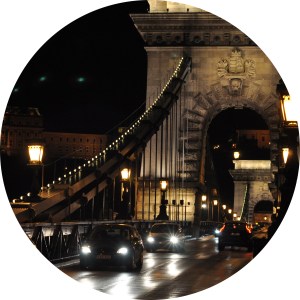
Hope, Savannah, Allison and I made our way back, flung our touristy backpacks into our hotel rooms and immediately headed out in search of some local cuisine. After filling our stomachs with gnocchi and goulash we began our exploration through the urban jungle. As the sky dimmed and the streetlights began to hum with warm light, we foraged through the twisting paths, finding something beautiful and exciting around every corner. We covered several square miles as we snapped photographs in front of the illuminated Parliament House from across the Danube and took a stroll across the illuminated Chain Bridge under the stars.

Our final day in Budapest included a visit to another art gallery, the Szepmuveszeti, then some free time in which some of us decided to explore the sites of the north end of the city including Hero Square, the Bupapest Baths, and the local park. After heading home on the second oldest underground metro in the world we prepared for an exciting new twist in our schedule – our first concert! Dressed to the nines, the fifty-four of us met in the lobby at six-thirty for a tram ride to the Bela Bartok National Concert Hall. This Gothic cathedral style hall has outstanding acoustic qualities and is ranked among the top five performing centers in the world. Bela Bartok Hall also housed the largest pipe organ in Europe. After listening to several beautifully crafted and performed symphony orchestra pieces, our band of students departed for the liveliest square in Budapest to spend some quality time together during our last night in the city.

Few Lines Composed Above the Atlantic

Blow off the eraser shavings

Let it hit me

My first year officially over

Mixed goodbyes

See you this fall….

Pack the car with luggage and friends

Laugh

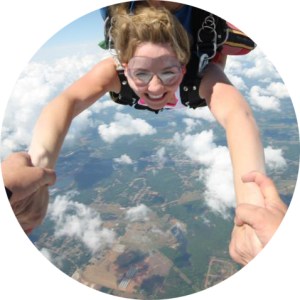
Jump out of a plane!

What’s the hurry?

But why wait?

Study hard

Art and music

Fragonard’s “The Swing,” Baroque, 1767

The eternal pendulum

Ancient Rome, Renaissance, Middle Ages, Romanticism

AWESOME professors

Ponder “why?”

Hugs kisses tears

I love my family more than words can describe

Jump on a plane

Tardy departure

A steep incline to cruising altitude

Plastic crinkles

I’ve never eaten with my elbows so close to my sides

Isn’t it funny that we are taught not to talk to strangers?

Kind, comfortable façade and conversation

I know there is more

I don’t ask

It seems everyone has loved and lost

Memory… A delicate spider web in the morning dew

Colors melt together across the sky

Soothing

Now it REALLY hits me

Dr. Ulrich is right

We should always brush our teeth for two minutes

Clear head and cloudy eyes

The longest I’ve ever talked to Him

Life in one word?

Delicate

Dr. Young

Although I am now old enough to drive myself to the doctor’s office, I have seen the same physician since my sole means of transportation was a shiny pink tricycle.  As I stood in Dr. Young’s waiting room just a few weeks ago, something caught my eye.  I walked past the roll of smiley face stickers and Scooby-Doo Band-Aids to a framed article I had never noticed before.  There, a photograph of Dr. Young squatting on a dusty path broke the expanse of yellow wallpaper.  Next to the picture was an article chronicling Dr. Young’s travels to Mexico to administer help to people in need.  The nurse beckoned me into the examination area before I completed the article.

After he was certain that my spine was straight and my heart was healthy, Dr. Young asked the question that I had been waiting to hear for twenty minutes: “Anything else I can do for you?”  With much anticipation, I asked him about the article in the waiting room.

For over thirty minutes, Dr. Young shared larger-than-life stories about his humanitarian expeditions into regions of southern Mexico.  He recounted the challenge of smuggling medicine into the country, his run-ins with the “Federales”, and the nights he spent sleeping on the dirt floor of a local church. Yet, his greatest tribulation of all was working with the poorest of the poor, who live in the region.

He told me he typically provides medicine to cleanse the villagers’ systems of parasites, but he also performs minor medical procedures. His efforts make the local people feel better for two or three weeks.  Unfortunately, no one else provides medical aid during the fifty other weeks of the year.  I gasped at the futility of Dr. Young’s efforts, and the reality of his work dulled my enthusiasm.  Then, in a bittersweet way, Dr. Young rekindled my fire as quickly as he had smothered it out.

“Sometimes it just feels like a waste of time—like a drop of water in an ocean.  But, what I’ve learned from my experience is that it’s not the medicine that really makes a difference.  Dedicating time to those impoverished people is what leaves a real impact.  They are much more grateful just to know that someone cares about them than they are to take the medicine that I bring.”

I realized that I too could find a way to combine a professional life (whether it is business, medicine or engineering) with much-needed humanitarianism. At college I anticipate that I will focus my studies on Business, Finance,  and International Affairs.  With a degree in business but with knowledge of foreign countries and their customs, I will be equipped to create positive change not just in my own backyard, but around the world.  I’m excited about my future and look forward to serving others, in the United States and abroad, to the best of my ability.

Technology

The obnoxious clanging of the 3:15 bell echoes in my ears as I log off my account in the computer lab. Dashing into the hallway, I’m nearly flattened by a classmate, furiously texting. I dodge kids whipping out mp3 players and sidle around others jabbering on cell phones. With a click, my car unlocks, and I leap in, delighted to be free for the weekend. Like clockwork, I punch on the radio and crank the tunes; I need something to keep me composed while sitting at these sluggish red lights! As soon as the garage door lifts, I swing my car in and shoot into the house. A few seconds after I offer up the code, the security system stops its incessant blaring.

Snatching two slices of cold pizza from the fridge, I flop them in the microwave and fly down stairs to fling on my dress. Fast as lightning, I’m back out the door. I’m glad the cigarette lighter is good for something; without it my phone would be drained. At the theatre, I flip down my visor and inspect my face in the lighted mirror, making sure I don’t look flustered. I fork over a ten dollar bill at the register and my change automatically dispenses into the tray at my fingertips. Snagging a pair of glasses, I spot my friends across the lobby and head over. I’d say Avatar 3-D at the IMAX is definitely worth seeing!

Technology is a double-edged sword. No one can deny that our world has become increasingly centered and dependent on technology. It continuously shapes our lives.  We must embrace it, grow with the changes it brings, and support it in our schools.   Educating America’s youth about this ever-expanding phenomenon is so much more than a worth-while investment – it is essential.

Homecoming

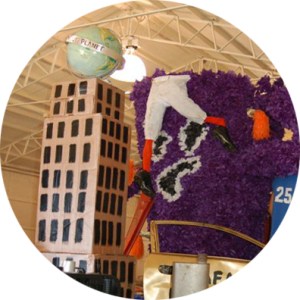
The task was clear…build a 23′ long rolling tribute to our football team and our beloved mascot (the Purple Hurricane). It must recognize our opponent (the Buccaneers), be based on the board game Battleship and include our gargantuan chicken-wire hurricane stuffed with purple tissue paper.  The funds to pay for this $700 masterpiece must be raised. Lastly, all work must be done solely by students within a supervised 10 hour period.  Translation: Once again I would have to peddle doughnuts on street corners, hunt for supplies and beg for volunteers.

I would love to say that my most notable leadership experience had lasting benefit to humanity, but really, the construction of  our senior classes’ homecoming float was undeniably a task that would challenge the most seasoned executive. Having been class president during both my sophomore and junior years, I have learned what to expect……we labor to construct awesome floats, undeniably superior to those of our competitors, yet each year receive disappointing 2nd place finishes.

So with me at the helm, approximately 30 of my classmates and I set out to build. Bound together by our task, we toiled. We painted, taped, glued and stuffed.  For the first time in 3 years, it was actually fun! It was not the frustrating and chaotic experience of years past, but rather a memorable time of fellowship. It was truly a memorable finale to our 4 years together.  And as a bonus, we paraded away with a blue ribbon.

My Inspiration

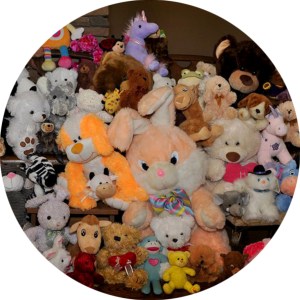
The little girl was wearing a dingy dress and her brother, who was slightly older, had a sweet smile and hair that looked like he had cut it himself.  Their eyes were as wide as silver dollars as they peeped just above the counter, astounded by practically 300 pairs of beady eyes staring back at them.  I thought of my own closet at home, brimming with grinning alligators, floppy-eared puppies, and at least three dozen beanie babies that I had long since outgrown.  As I secretly ushered the two children into the room where I was working, I thought:  “These could be the first stuffed animals they have ever owned.”   I let those children choose their toys, even though it was against the rules for me to let anyone into the room.  I was supposed to distribute whatever plush toy I could snag the fastest.  The kids were rushing around the room, frantically searching to find matching frogs.  Praying that there were at least two of the unusual animal trapped somewhere within the piles, I was relieved to see them parade away, tightly hugging their treasures.  I met their father’s watery eyes, and for a moment, his grateful smile cloaked his weariness. In that fleeting moment, he seemed to say “Thank you” much more effectively than he ever could have with words.

I turned my attention to the next eager patron.  The iron haired woman shuffled close to the counter looking as anxious as the children who had just left.  She asked in a timid voice, “Could I have a couple for my grandchildren?”  Although I wanted to grasp her hand like an old friend’s, I just politely nodded my head and asked which ones she would like.  She pointed to at least six different animals, so I poked them all into a large plastic bag and watched as she ambled away, clinging to all of the precious cargo she would later give away as Christmas gifts.

This was not my first volunteering experience, and it was certainly not my last. The hours I spent handing out stuffed animals at the New Frontier Thanksgiving Dinner are perhaps some of the most memorable of my entire life.  For the first time, I completely understood the trite saying “It is better to give than to receive.”  I began to realize how much I have, and more importantly, I began to realize how much I have to give to others and to my community.

The experience changed me. I now search for the reward and satisfaction of helping others in all things that I do.  That day at the New Frontier Dinner spurred me to continue my volunteer work, and to make volunteering a major part of my life.  Prior to this particular volunteer experience, I was more focused on my personal endeavors.  One of my most time consuming activities was playing soccer. I practiced soccer three times a week and played multiple games on the weekends. I actually left the Thanksgiving dinner that day much sooner than I would have liked because of a soccer game.  I now realize what is really more important to me.  Although I still love to play soccer, I recently decided to stop playing club soccer during my last year of high school so that I could shift my focus to volunteer work.  It was a difficult choice, but I realized that I could impact many more people by working to improve my community than by scoring goals on the soccer field.

As a result of a single day of volunteering, I have altered my entire lifestyle to focus more on others than on myself.  I now work at the Bartow Advocates for Children Shelter several days a week.  Although my work at the shelter and my general volunteering is still invaluable to me, my experience at the New Frontier dinner remains a major milestone in my life.  It was the point in time that prompted me to branch out and become a more active volunteer worker.  Who knew that handing out stuffed frogs would lead my life in an entirely different direction and help me positively impact others in a way that I genuinely love?