I anxiously tapped my credit card against the dull, plastic countertop as the ancient printer sputtered out the receipt for our tickets. The water taxis leave every thirty minutes from Ferrovia, the central station in Venice, and we HAD to catch the battered vessel that was currently bumping up against the dock a couple hundred meters away. I squiggled some semblance of an “S” and an “A” on the curled slip of paper and all but threw the five other tickets to my travelling companions. “Run for it!!!” I yelled; Unfortunately, “running” is hardly ever possible on the tourist crowded Venetian drag. Shouldering through the walls of backpacks and sneakers, I saw Andrew Edge and Allison Smedberg bobbing in and out of sight ahead of me. Skidding on the marble pathway, slick with fresh rain, I allowed myself a quick glance over my shoulder to check the rest of the gang’s progress before bolting around the corner toward the boat. With one last shaky step, I was securely aboard the boat. As I pivoted, I watched our last passenger climb across the ominous crack that had begun forming between the floating ferry and the island. Erupting in laughter and relief, we collapsed onto a cluster of seats near the bow of the boat.
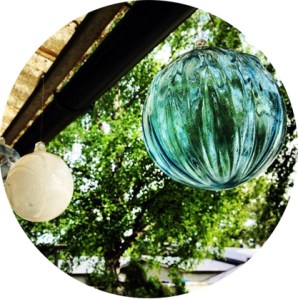
Rain thudded against the Plexiglas plates as we plowed through the rough canal waters toward the nearby island of Murano. At first, Murano prospered as a fishing port, a salt production site and a central trade location, but soon the island’s commercial importance declined. Years later, all the glassmakers in Venice were forced to move to Murano because the inhabitants of the mainly wooden-framed city feared the outbreak of factory fires. Eventually exporting began and the island became famous, initially for glass beads and mirrors. Aventurine glass was invented on the island, and for some time Murano was the main producer of glass in Europe.
After about thirty minutes we trudged from beneath the boat’s shelter and onto the soaked, creaking wooden platform. Just as we crowded around a map to orient ourselves a local advised in broken English and with heavy use of hand gestures, “Glass blowing… THAT way. Closes, four o’clock.” Glancing down to my wrist I watched the longer finger creep past the nine. Time for another mad dash.
We fast-walked to the best of our ability, knowing that one false move in our ill-functioning attire could leave us on the ground or worse yet… in the water that lapped along the sidewalk only three feet to our left. Just when we thought we would never find the factory amongst the winding routes that are so commonplace throughout Europe, we traversed a bridge and zoomed under an arch straight into a yellow sign reading “Pauly & C. – Compagnia Venezia Murano.” Founded in 1866, this is the oldest glass factory that is still in operation today. We then saw a younger man ushering us his way and into a plain, brick building. Though somewhat skeptical, we didn’t want to miss our only opportunity to see the glassblowers in action, so we reluctantly followed.
We turned left into a room with just a few other camera-laden tourist types and were directed to stand on a tiered platform a safe distance away from the glowing furnace, whose heat was being carried all the way across the room. The younger man began to narrate as a careful yet certain “Master Glass Blower” began to showcase his trade. Even though my polyester rain jacket was slowly turning me into a Hot Pocket, I was entranced as the trained artisan easily rolled a rod around in his hand that seemed magically attached to a magma like substance on one end. He spun, worked and blew into the metal rod until the shape of a sphere, and then a vase began to take shape from the glowing fireball.
Once the masterpiece was complete, it was set on a table to cool for several minutes while the young man continued to explain to us the mixture of silicate sand that is used to form the glass and the insanely high temperatures (upwards of two thousand degrees Fahrenheit) that the glass remains even after cooling for several minutes. While we all puzzled over these radical facts, the man reached into a bucket and splashed a handful of water onto the vase. Just as quickly as it had been forged, the piece of artwork shattered into hundreds of shards on the concrete floor.
I was taken aback by the impermanence of the clear urn and how quickly its beautiful existence had been terminated. I couldn’t help but think what a shame it is that all good things seem to come to an end all too quickly. Already I have travelled to Budapest, Prague, Vienna, and Venice…. only four more cities remain. I have loved every moment of my time on the Oxford Study Abroad Program! Travelling across Europe, meeting new friends, seeing new sights like the island of Murano, and learning so much each and every day has been a true blessing. I am determined to make the most of each day and each experience that still lies ahead of me!




 A Jacket's Journey